
Ingredient · Cheddar Cheese
Cheddar. From local Mexican dairy producers.
Melted on the plancha alongside the beef. Binds everything. No cheddar, no California burrito.
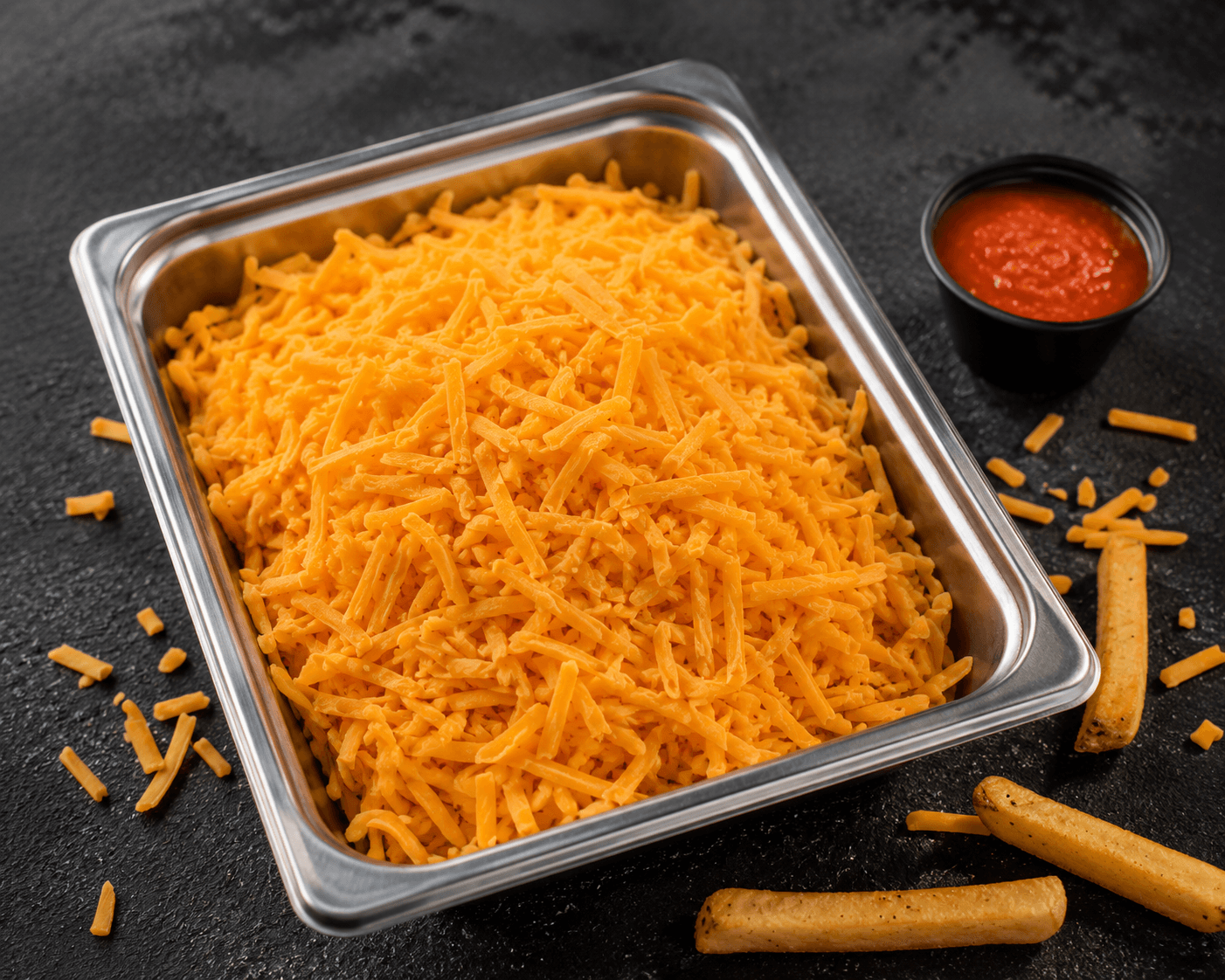
Why cheddar in a taquería?
The California burrito is from San Diego, not Mexico City. You don't use Oaxaca cheese there, you don't use Manchego. You use cheddar. It's what the original recipe calls for and it's what gives you the texture you expect: yellow cheddar, melted on the plancha, binding the meat to the fries to the salsas.
The problem in Mexico City is that almost all cheddar is industrial and imported — red blocks that arrive in cardboard and taste like packaging. At Juanberto's we chose cheddar from local Mexican dairy producers: fresh milk, fewer kilometers, better flavor. It's the correct cheddar for the correct California recipe.
Real cheddar. Local. Melted on the plancha.
Where it comes from
Cheddar from Mexican producers.
Why local beats imported.
Local Dairy Producers
We work with Mexican dairies instead of imported industrial blocks. Fresh milk, freshly aged cheese, short supply chain. You taste the difference from the first bite.
Why Cheddar, Not Oaxaca
Oaxaca and Manchego pull into strings or crumble — great for quesadillas and tlayudas, wrong for a 1/4 kilo burrito. Cheddar holds up to plancha heat without breaking into oil, and its acidity cuts through the richness of the carne asada.
How We Melt It
It goes on the meat on the hot plancha — not separately, not after. The cheese melts directly onto the beef, catches the smoke off the plancha, and absorbs the juices. By the time we roll the burrito, it's fused into the filling.
How we use it
On the meat. On the plancha.
Cheddar doesn't go on at the end of assembly. It goes on at the start — straight onto the meat while it's cooking. This changes everything: the cheese isn't a topping, it's part of the beef.
The layer of melted cheddar seals in the juices and keeps the filling hot longer. When you bite into the burrito 15 minutes later, it's still warm inside.
Amount matters: enough that you feel it in every bite, not so much that it covers the beef flavor. We calibrated the ratio over months.
Where to find it
What to order it in.
Almost anything that hits the plancha has cheddar.
California Burrito
The original. Melted cheddar on the asada.
Read the guideCarne Asada Fries
Cheddar fused into beef and fries.
See on the menuBreakfast Burrito
Eggs, fries, pico — and cheddar. All day.
See on the menuBean & Cheese
Refried beans and cheddar. The simple version. The correct one.
See on the menu
Or order it locally
Get it in Condesa.
Same ingredient, same recipe, same hand-rolled burrito — delivered to Condesa via Rappi, Didi Food, or Uber Eats, or picked up at the counter in Roma Sur.
FAQ
About our cheddar.
Why cheddar instead of Oaxaca?
The California burrito recipe is from San Diego, where cheddar is the standard cheese. Cheddar holds up on the plancha and its acidity cuts the richness of the carne asada — Oaxaca or Manchego behave differently.
Where does the cheese come from?
From Mexican dairy producers. Short supply chain, fresh milk, fewer kilometers than an imported industrial block. As a policy we prefer local when the local is good.
Is the cheddar vegetarian?
Yes. Our cheddar is made with microbial rennet, not animal-derived. Vegetarian-friendly.
Is it pasteurized?
Yes. All the milk and cheese we use meets standard pasteurization and Mexican health regulations.
Can I order a burrito without cheese?
Yes. Order it 'sin queso' — at the shop, via WhatsApp, Rappi, Didi Food, or Uber Eats. No extra charge, no price change.
Do you have a double-cheese option?
If you want extra cheddar, ask when you order. We charge it as an add-on (ask for the price at the shop).