
Ingredient · Crema (Sour Cream)
Crema. Grass-fed. The final layer.
Goes in last to soften everything else. Without crema, the California burrito is too intense.
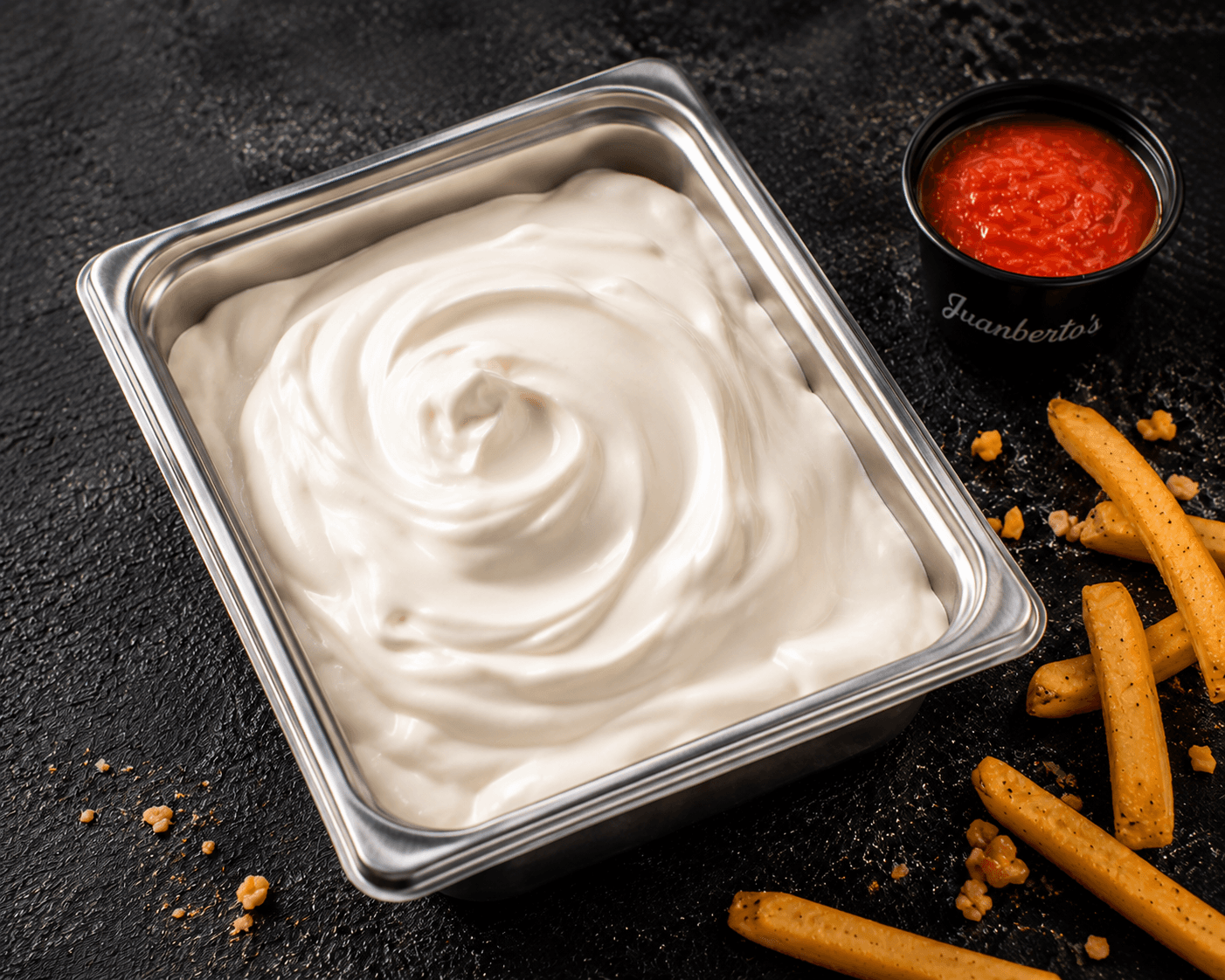
Why crema, and why grass-fed?
Crema (sour cream in the US, crema ácida in Mexico) is what binds the textures of the California burrito. The meat has force, the cheddar has fat, the pico has acid, the fries have starch. The crema lowers the volume — it softens, refreshes, balances. Without it, the burrito is flat. With it, the layers come through.
The problem is that industrial sour cream is mostly air and additives. Thickeners, gums, preservatives. It tastes like filler, not dairy. We use grass-fed crema — from cattle raised on pasture, not grain — which has more body, more dairy flavor, and fewer ingredients on the label. You feel the difference when it's the last layer before the wrap closes.
Grass-fed. The layer that closes the California.
Where it comes from
Crema from grass-fed cattle.
Why the cow's diet changes the taste of the crema.
Pasture-Raised Cattle
Grass-fed means the cow ate pasture, not grains or processed feed. This changes the fat profile of the milk — more omega-3, more dairy flavor, less neutral filler taste.
No Gums or Thickeners
Industrial Mexican crema often uses gums (xanthan, guar) to standardize the texture. Ours doesn't — the thickness comes from the natural fat content of the milk, not additives. Short label, real flavor.
Why It Goes In Last
Crema is the counterweight. It goes in last so its freshness doesn't mix with the heat of the plancha. When you bite the burrito, the first thing you feel is temperature — and the crema is what lowers the intensity.
How we use it
The last layer before the roll.
We assemble the burrito in order: meat with melted cheese, fries, pico, guacamole — and at the end, the line of crema. Never first (it would mix with the heat). Always last.
Measured amount. It's not a dip — it's a balance. Too much crema and everything tastes like sour cream; too little and it disappears. The right line is a thin cord running the length of the burrito.
Straight from the fridge to the burrito — cold, not room temperature. The temperature contrast between the hot meat and the cold crema is part of the experience.
Where to find it
What to order it in.
Crema shows up in the burritos where balance matters.
California Burrito
The original. A line of crema before the final roll.
Read the guideCarne Asada Fries
Crema cord on top of the fries and meat.
See on the menuBreakfast Burrito
Softens the eggs and cheddar. All day.
See on the menu
Or order it locally
Get it in Narvarte.
Same ingredient, same recipe, same hand-rolled burrito — delivered to Narvarte via Rappi, Didi Food, or Uber Eats, or picked up at the counter in Roma Sur.
FAQ
About our crema.
What is crema ácida?
It's what the US calls sour cream and Mexico calls crema ácida — fresh cream cultured with lactic bacteria. Denser than natural cream, slightly tangy, and the right pick for a California burrito.
What does grass-fed mean?
That the cow whose milk we use was raised on pasture instead of grains. This produces milk with a better nutritional profile (more omega-3) and a more pronounced flavor, especially in cream-based products.
Is the crema vegetarian?
Yes. Cream and lactic cultures. No animal ingredients beyond the milk itself.
Is there a no-crema option?
Yes. Order it 'sin crema' when you order. No extra charge and no price change.
Why not use natural cream instead of crema ácida?
Natural cream is sweeter and less dense — it doesn't hold up to the heat of the burrito and separates. Crema ácida has the right consistency and balance for this recipe.
Where does the crema come from?
From a producer working with grass-fed cattle. We receive fresh deliveries several times a week.
Taste it as the final layer.
Cold, in a line, right before the wrap. Inside the California.